Italy Travel Tips for First Timers: 5 Mistakes to Avoid in 2026
By Kris Vazovsky — Founder of Hidden Jam. Forbes 30 Under 30. Licensed boat captain. 80+ countries
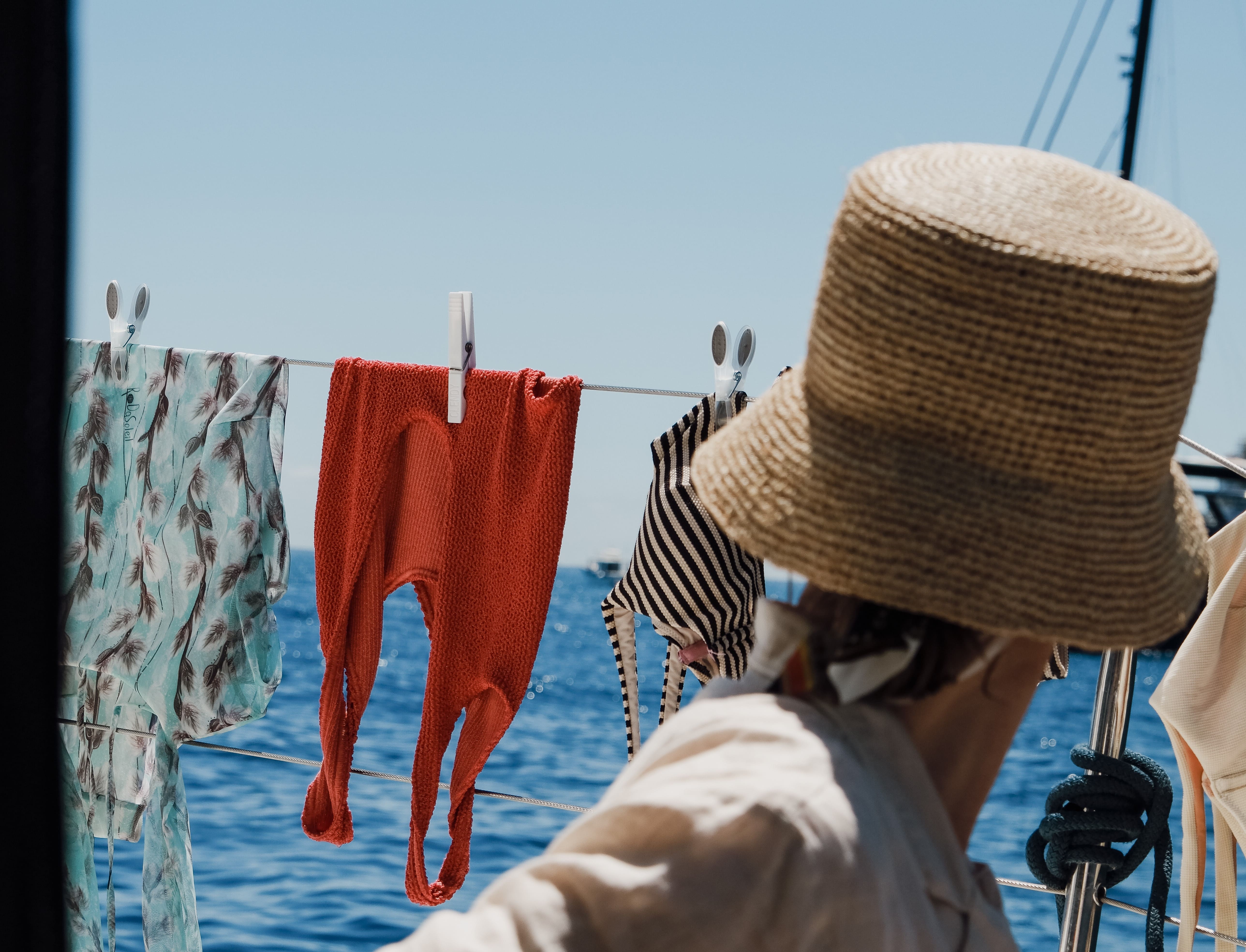
The five mistakes are predictable: Rome queues, Florence overload, driving the Amalfi Coast, skipping the ferry, and cutting Sicily. Each one is fixable — here's exactly how.
A lot of Americans visit Italy, spend $4,000, and end up eating right next to their hotel. I'm not judging. I did the same thing my first time. Three nights in Rome, pasta near the Colosseum, €32 for a carbonara that tasted like a packet mix.
Italy in 2026 has 61 UNESCO World Heritage Sites, more than any country on the planet, per UNESCO's official list. It isn't overrated. First-timers do it wrong, and the cost shows up as queues, tourist-trap dinners, and the Amalfi Coast seen from a rental-car windshield.
I'm Kris. I run Hidden Jam. I've sailed the Mediterranean coast over 10 times and spent the last few years organizing group adventures across Italy. I know this country through the windshield of a rental car at 6 AM and through the window of a boat anchored somewhere nobody is searching for on Google.
The first time I went to Italy, I had a 4-day Rome itinerary printed from a travel blog. Day 2, I was standing in a 2.5-hour line for the Vatican. July. 34 degrees. The person next to me was asking Siri where to eat. I left thinking Italy was overrated. It isn't. I just did it completely wrong.
Here's what I know now.
How Do You Skip the Line at Rome's Biggest Sites?
Most first-timers spend 60-70% of their Rome time at three monuments: the Vatican, the Colosseum, and the Roman Forum. All three need either a timed ticket booked 3-4 weeks ahead or a 90-minute minimum wait in peak season (June through September).
The thing nobody tells you: the Vatican Museums contain the Sistine Chapel. You don't need a separate Sistine Chapel ticket. It's inside.
Book the early-access Vatican ticket. The museums open at 8 AM for the general public; early-access tickets get you in at 7 AM. That's one hour in there with maybe 40 people in the room before the crowds arrive at 8.
For the Colosseum, book the underground arena floor access. €6-8 more than standard entry. You walk where the gladiators walked. The regular crowd walks on a raised platform above you. Two completely different visits.
The Roman Forum at 6:30 AM. Not because it's less crowded — it still has 50 people at 6:30 AM. Because the light is different, and you can see all of it before the buses arrive.
What's the Right Strategy for Florence's Museums?
Florence has one of the highest concentrations of Renaissance art per square kilometer in the world. It also has the Uffizi Gallery, which holds Botticelli's Birth of Venus and Primavera, and the line for same-day tickets runs 2-3 hours on a slow day.
Book the Uffizi 30 days out. That's the window. Inside, go straight to rooms 10-14, where the Botticellis are. Don't start at room 1 and try to see everything. The gallery has 45 rooms. Pick which pieces you want to see before you arrive. Give yourself 2 hours minimum for just the highlights.
Florence outside the museums is the part most first-timers miss. The Oltrarno neighborhood, south of the Arno river, is where actual Florentines live. The San Miniato al Monte church sits on a hill above it. Walk up. It's free. The view over the whole city costs nothing. Most tourists don't know it exists because it doesn't show up in the top-5 lists.
Mercato Centrale, second floor. Not the ground-floor market hall. The upstairs food hall has some of the best food in the city at reasonable prices. Not a hidden secret, just consistently overlooked because everyone walks past it on the way somewhere else.
Why Shouldn't You Drive the Amalfi Coast?
This one I feel strongly about.
The SS163 is a two-lane road on a cliff. It was built for donkeys in the 1800s. In summer, it has tourist buses, Vespas, taxis, and rental cars all trying to pass each other on corners with no guardrails. Average speed: 15 km/h. The Positano-to-Amalfi drive that looks like 18 km on the map takes 55 minutes minimum on a Tuesday in June. On a Saturday in August, over 90 minutes.
Take the ferry. Positano to Amalfi: ~20 minutes, €8 to €13 depending on operator, you're on the water, and you're seeing the coast from the angle worth seeing it from. Ferries run April through October, every 1-2 hours, with around 25-30 daily crossings in peak season per Ferryhopper data.
Park your car in Sorrento or Salerno and don't touch it again until you leave the coast. Sorrento has both a ferry terminal and a train station. It works as a base.
What's the Better Way to See the Amalfi Coast?
I said don't drive it. Here's the alternative that actually works.
Hidden Jam runs a sailing trip in May called Amalfi Coast. Seven days, starting and ending in Salerno. Route: Positano, two days anchored off Ischia, Sorrento, Amalfi, back to Salerno. Luxury catamaran. Small group.
Why I'm flagging this: Ischia is the part of the Amalfi Coast most people skip. It's a volcanic island 45 minutes offshore. Thermal hot springs that have been running since the Romans. The Aragonese Castle, with the original fortress dating to 474 BC, sits on a rock connected to the island by a stone bridge built in 1441 by Alfonso V of Aragon. On a June afternoon, it has maybe 300 visitors. Positano on the same afternoon: 8,000.
Day 4, you visit a thermal spa on Ischia. Day 6, tennis on a cliff over Amalfi and seafood after. Day 2 in Positano, a private chef cooks on the boat with local ingredients.
€3,490 for the week. Not cheap. Cheaper than the hotel-restaurant-tourist-trap version of the same coastline, and you see parts of it that aren't accessible any other way.
Why Is Sicily Worth Three to Four Days?
Most first-timers skip it. Mistake.
Sicily is culturally and historically different from the mainland in ways a day trip from Rome doesn't prepare you for. The food alone: arancini, granita with brioche for breakfast, swordfish prepared in ways I haven't seen replicated anywhere else. The Greek temples at Agrigento are older and better preserved than anything in Rome.
Palermo's Ballarò street market in the morning. Get there by 8 AM. The loudest, most alive 90 minutes you can spend in Italy.
The logistics: Sicily needs either a flight or a 2.5-hour ferry from Villa San Giovanni. Not a quick add-on to a Rome week. But on a 10-day-or-longer Italy trip, Sicily should take 3-4 of them. Fly into Palermo, rent a car, drive the southern coast, fly out of Catania.
This is a different country from the one you arrived in. That's the point.
FAQ: Italy Travel Tips for First Timers
What's the best way to see the Amalfi Coast without a car? Ferries. They run April through October, every 1-2 hours, with 25-30 daily crossings in peak season. Positano to Amalfi is around 20 minutes for €8-13. Park in Sorrento or Salerno and use the ferry network for the entire coast. For a fuller route that includes Ischia and the parts of the coast not reachable by ferry, a small-group sailing trip like Hidden Jam's Amalfi Coast week covers the whole coastline from the water.
How much should a first trip to Italy cost? A reasonable first trip — flights, mid-range hotels, food, trains, and entry tickets — runs $3,500 to $5,000 per person for 10 days, depending on season. Peak season (June-August) adds 30-40% to hotel rates. Shoulder season (May or September) gives you the same weather at noticeably lower prices.
Is it better to visit Italy in May or September? September. Sea temperature in southern Italy is still 24-25°C, the August crowds are gone by mid-month, and ferry schedules are still running full frequency. May is also good but the water is colder — closer to 19-20°C.
How many cities should I visit on my first Italy trip? For 10 days, three cities maximum. Rome (3 nights), Florence (2 nights), one of Naples/Amalfi (3 nights), travel days included. More than that and you spend the trip on trains. Italy rewards staying longer in fewer places.
Do I need to speak Italian? No. Tourist areas operate in English. But "buongiorno," "grazie," and "il conto, per favore" change how restaurants and shopkeepers treat you. Worth the 30 minutes to learn.
Should I rent a car in Italy? Depends entirely on the route. For Rome, Florence, Venice, Milan: no — the trains are faster and cities are walkable. For Tuscany, Puglia, or Sicily: yes — public transit doesn't reach the small towns. For the Amalfi Coast: absolutely not. Park it in Sorrento or Salerno and use ferries.
Ready to See Italy Without the First-Timer Mistakes?
Hidden Jam runs small-group sailing trips along the Amalfi Coast in May, with seven days, eight to ten guests, and a route that includes the parts of the coast you can't reach by car.See the Amalfi itinerary →