Dream Surf Trip in Europe 2026: 5 Spots Better Than Bali
By Kris Vazovsky - Founder of Hidden Jam. Forbes 30 Under 30. Licensed boat captain. 80+ countries
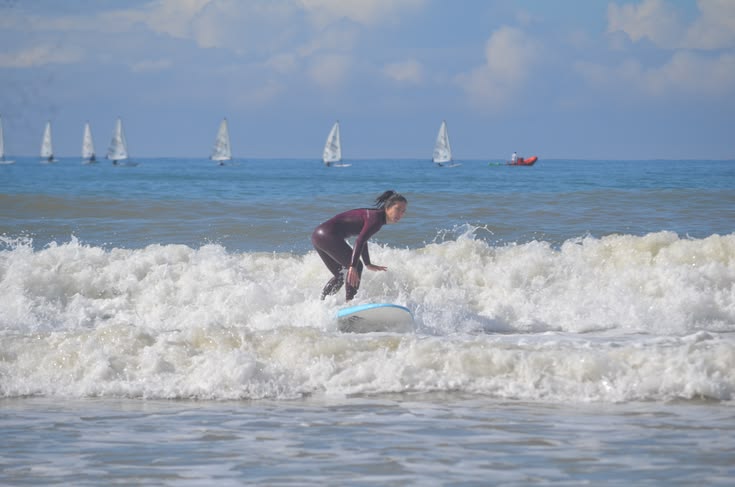
The five: Hossegor and Biarritz on the French Basque coast, Peniche and Nazaré in Portugal, and the Hossegor-Biarritz combination that solves the choice most surfers get wrong. Here's why Europe beats Bali for most trips.
Europe's surf coast runs from southwest France to southern Portugal. Less than 3 hours from most European capitals, no jet lag from the US East Coast, and you're in the water the same day you land. Bali, for comparison, is 17-19 hours of flying from London and 24+ from New York. That's 2 days of your week spent on planes.
The five spots below: each one's actual surf level, when it works, and the logistics most travel content skips.
I'm Kristina Vazovsky. I run Hidden Jam. I've surfed both Europe and Indonesia, and Europe is where I keep going back.
Most of our surf-retreat guests arrive with a low-key bias against Europe, expecting a downgrade from Bali. By the second morning, after a 7 AM paddle with maybe 6 other people in the water and a walk to a bakery right after, the comparison has stopped making sense.
The thing that gets me every time: you don't actually have to fly to the other side of the world for a real surf trip. That sentence sounds obvious until you've actually done a week on the Basque coast and realized how much money, time, and jet lag you've been spending on "destination surf." Everything is more accessible than the Bali narrative makes it look.
Where Should You Surf if You Want Performance Waves in Europe?
Hossegor. Thirty minutes north of Biarritz on the French Atlantic coast.
La Gravière is the main break. Heavy, hollow barrels. The kind of wave elite surfers travel specifically for. Hossegor has hosted top-tier WSL events for over three decades, including the Quiksilver Pro France from 1987 to 2019 (per the WSL archive). The Championship Tour stop moved off Hossegor after 2019, but Challenger Series events still run here every autumn, and the wave quality didn't change with the calendar.
The wind controls everything. Offshore in the morning, blown out by 10 AM. You check the forecast the night before, set an alarm, move when it's good.
September through November is the window if you're chasing performance surf. Water temperature drops to 17-19°C in November per seatemperature.org, so a 4/3 wetsuit is standard.
The guests who get the best Hossegor sessions treat the trip as a flexible window, not a fixed schedule. Wake at 6:30 AM, check the forecast and the webcam, drive 25 minutes if the call is good, skip the session if the wind already turned. Anyone who books a 5-day window and reacts to conditions usually catches 3-4 full-quality days. Anyone who plans day-by-day in advance misses the swells.
Hossegor rewards people who pay attention. Not willing to get up early and move fast: you'll miss it.
Why Is Biarritz the Best Surf Base on the Atlantic Coast?
Biarritz is 30 minutes south of Hossegor and a completely different setup.
Town first, surf spot second. Restaurants open for 40 years. A Saturday market that's been running since 1885. A medieval-era castle on the cliff above Plage du Port Vieux.
Côte des Basques is the main wave: long rolling right-handers, good for longboarders, good for intermediates, less crowded than the central Grande Plage. It's also where European surfing started in 1957 (per the France.fr tourism authority), when a screenwriter named Peter Viertel introduced the board to the local fishing community.
Here's what matters for logistics. Biarritz Airport (BIQ) is 4 km from Côte des Basques (per surf-fore cast.com). Line 11 bus runs every 30 minutes between the airport and downtown for €2, journey 10 minutes. You land, you're in the water the same afternoon. In Bali, that gap is half a day. In Biarritz, it's a taxi.
What's different here from anywhere else I've surfed: the post-session routine. A morning paddle at Côte des Basques, 10 minutes walking up the cliff path to a bakery for coffee and a croissant, then a market run for the villa kitchen. The whole loop takes 90 minutes and you're back by 11 AM. The combination of serious wave and a dense walkable town within 500 meters of each other is what most surfers don't expect about the Basque coast until they've done it.
And the other part nobody warns you about: the post-surf glass of wine. The Basque coast sits between Rioja and Bordeaux. You don't drink beer after a session here. You drink a glass of cold rosé, a local cidre, or (if you've earned it) a glass of champagne. After a 4 AM swell window and three hours in the water, that's a different category of experience from a Bintang on a Bali beach. Not better in every way. Just very, very different. And not something I've found anywhere else in surfing.
Summer here: warmer water (around 22°C), lighter crowds than Hossegor, less intense waves. If you're working on confidence, this is your spot. If you want barrels, head north to Hossegor.
The real friction on a Biarritz trip isn't getting from the airport to the water. It's day 2. Which break to paddle out at on which tide, where the locals eat (not where the surf-camp owner sends you), how to read the wind shift at 9 AM. Most people spend the first half of the trip figuring this out, then leave just as it clicks.
Hidden Jam runs a Biarritz surf retreat in July. July 8-12, 2026. Five days, small group, villa 15 minutes from the center. Private chef dinner, spa day built in, and someone who knows the forecast and the breaks. €2,290 per person. The version where logistics are already solved.
Is Peniche, Portugal Worth Choosing Over Biarritz?
If the Basque coast is crowded in summer, Peniche is the answer.
90 minutes north of Lisbon. Less known than the Basque towns, less busy, same quality of surf for most levels. You land at Lisbon Airport, rent a car, and you're at the break by mid-afternoon.
Supertubos is the headline break. Fast, heavy beach break with proper barrels when the swell aligns. It hosts the MEO Rip Curl Pro Portugal, a WSL Championship Tour stop, currently scheduled for October 22-November 1, 2026 (per WSL 2026 calendar). When the contest runs, the town fills up. Outside contest dates, Peniche is a fishing port with a few surf camps and almost nothing else, which is the entire point.
Spring and summer: smaller swell, more manageable for intermediates. Autumn is when Supertubos delivers what it's known for: fast beach-break barrels.
The Peniche difference from Biarritz isn't the wave quality, which is comparable. It's the social structure. Biarritz has a town life that exists independently of surf. Peniche is a fishing port that the surf community moved into, which means almost everyone you meet at a café is either a surfer, the parent of one, or someone running the infrastructure that supports them. For 7-10 day trips that's a feature. For a week with non-surfer partners, it's a constraint worth knowing about in advance.
If you're choosing between Biarritz and Peniche in July, take Biarritz. If you're choosing in September, take Peniche. The water in Portugal stays warmer into autumn (19-20°C in late September vs 17-18°C in Hossegor), and the swell ramps up earlier.
Can You Actually Surf in Nazaré in 2026?
Most people hear Nazaré and think it's only for big-wave specialists. Half right.
Praia do Norte is the one you've seen online. The Nazaré Canyon plunges to 5,000 meters deep and runs 170-230 km long, funneling Atlantic swell at one specific point and amplifying it. The documented record wave is 26.21 meters (86 ft) face height, surfed by António Laureano in 2020. The surfers charging it have jet-ski safety crews because if something goes wrong, you can't swim out.
That part isn't for most people.
But walk 10 minutes to Praia da Nazaré (the town beach) and you're on a completely different break. Same swell system, manageable size, almost nobody in the water. The crowds came to watch, not to surf. The viewing platform at São Miguel Arcanjo lighthouse (110 meters above the beach) is where the spectators are.
Nazaré is the only place I know where you can spend a morning on 1.5-meter waves at the town beach, walk to a café for lunch, and then watch jet-ski safety crews tow professionals into 20-meter walls the same afternoon. Two completely different sports, same town, same swell. For groups with mixed surfing levels or non-surfer partners who want to see the spectacle, it's the most efficient single day in Portuguese surf.
That contrast isn't a marketing line. It's just the geography of how the canyon affects one specific beach and skips the next one over.
Hossegor or Biarritz: Which One Should You Actually Pick?
The wrong question.
Go to both. They're 30 minutes apart by car or on the SNCF TER train (about €4, 25 minutes).
Morning at Hossegor when La Gravière is firing. Afternoon at Côte des Basques: longer waves, easier to read, good for working technique when your legs are already tired from the morning session.
That combination (performance break plus a functioning town) is what makes the Basque coast the answer for most surfers asking the Bali question.
Not Bali. Not because Bali is bad. Because this is closer, cheaper to stay in, and you're in the water the same day you land.
Guests who book our July retreat expecting "either Hossegor or Biarritz" almost always end up using both within 24 hours of arrival. Once you realize the drive between them is shorter than getting across most US cities, the dichotomy disappears.
FAQ: Dream Surf Trip in Europe
Is Europe really better than Bali for a surf trip? For most travelers from the US and Europe, yes. The flight from London to Biarritz is 1h 50min and €80-150 round trip in shoulder season. London to Bali is 17-19 hours, €700-1,200, and includes two layovers. You lose 2 full days to travel each way. The wave quality on the French Basque coast and the Portuguese coast in September-October is comparable to Bali shoulder season, without the jet lag. Bali still wins for boat-only spots, water temperature year-round, and dry-season consistency.
How do you actually pick between Hossegor and Biarritz for a 5-day surf trip in 2026? Don't pick. Base in Biarritz, drive 30 minutes to Hossegor when La Gravière is forecast, return to Biarritz for evenings. Biarritz has the airport (BIQ, 10 minutes away), the food, and Côte des Basques for warm-up sessions. Hossegor has the heavy wave but limited dining and no airport. Picking one means missing 40% of what the region offers in five days.
Can a group of 6 with mixed surf levels actually share a surf trip on the Basque coast? Yes, this is the format that works best in Biarritz specifically. Côte des Basques handles complete beginners on the south end (gentle rollers at low tide) and intermediates on the north end (faster, hollow sections at mid tide), in the same session. Plus a surf instructor for the beginners while the intermediates self-organize. The mistake is mixing levels in Hossegor, where La Gravière is unforgiving and beginners get exhausted within 20 minutes. The rule we use on Hidden Jam's July retreat: beginners surf Côte des Basques mornings, intermediates surf Hossegor or Anglet, group meets for lunch.
What's the cheapest way to do a week of surf on the European Atlantic coast? Peniche, Portugal, late September. A surf hostel runs €25-40 per night, a rented board is €15/day, food at €10-15 per meal, flights from London to Lisbon under €100 round trip. Total around €700-900 per person for 7 days, board included. The Basque coast in July is roughly double that. Nazaré is similar to Peniche but limited surf-friendly accommodations.
Is the Quiksilver Pro France still in Hossegor? No. The Quiksilver Pro France ran on the WSL Championship Tour from 1987 through 2019, then was removed from the Championship Tour after 2020. The wave quality at La Gravière didn't change. As of 2026, the WSL Challenger Series still hosts events on the Landes coast in October, and the surf itself remains one of the most consistent beach breaks in Europe.
When does the water get too cold for a wetsuit-free surf in Europe? For most surfers, never. Even peak August on the Basque coast tops out at 22-23°C, where a shorty or 2mm wetsuit is more comfortable than nothing. November-March requires a full 4/3 or 5/4 with hood and booties. The sweet spot for "no wetsuit decisions" is mid-July through early September.
Honest answer: the wetsuit is the only thing I dislike about surfing in Europe. I avoided October-March trips for years because of it. Then I learned a specific hack involving a plastic bag that makes putting on a cold wetsuit completely painless. I won't put the technique in writing here because the only people who need it are the ones already in the water in October. Ask me in the comments and I'll share it.
Want the Biarritz Surf Trip Without Building the Logistics?
Hidden Jam runs a 5-day surf retreat in Biarritz July 8-12, 2026: small group, villa 15 minutes from the center, private chef, daily access to both Côte des Basques and Hossegor depending on the forecast, plus someone who reads the breaks for you. Starts at €2,290 per person. See the full Biarritz itinerary →